Why the Best Story Worlds Are Broken

The most persistent delusion in modern world-building is the belief that a creator must be an omniscient cartographer. We have entered an era of the totalizing narrative, where every lineage is traced to its root and every supernatural mechanic is codified with the cold precision of a software manual. While this level of detail offers a superficial sense of density, it often inadvertently suffocates the very thing it seeks to sustain. When a fictional universe is mapped to its furthest borders, the audience is left with nothing to do but observe. They become tourists in a completed museum, admiring the exhibits before moving on to the next attraction.
True immersion requires a more disciplined form of restraint. To build a world that endures in the collective imagination, a writer must master the art of the architectural void. This is the practice of Negative Space Narrative Architecture. It is the deliberate, strategic preservation of silence within a story’s history or physics. In visual art, negative space defines the subject by showing us what it is not. In world-building, these intentional gaps exert a gravitational pull on the audience. They create a narrative vacuum that the human mind is evolutionarily hardwired to fill.

We must distinguish this approach from the common mystery box. A mystery box is a simple delay of information, a secret that the author already possesses and intends to reveal for a momentary shock. It is a transactional mechanic. Negative space is a permanent feature of the landscape. It is a hole in the world that is never meant to be plugged by the creator. Consider the difference between a character whose parents are a secret and a society where an entire century of history has been erased from public memory. The former is a plot point. The latter is a habitat.
When you leave a high-stakes void in your lore, you grant the audience the agency to inhabit your world. They begin to project their own anxieties, cultural values, and theories into the silence. This act of co-authorial projection is the foundation of genuine fandom. The audience stops being a group of passive consumers and starts acting as the dark matter that holds your universe together. They are no longer just watching a story. They are performing the intellectual labor required to sustain a reality.

For the professional creator, this is a tool of immense practical value. In a transmedia environment, these voids provide the necessary real estate for expansion. Rather than using different platforms to provide more answers, a sophisticated architect uses them to offer conflicting perspectives. A fragment of a diary found in a digital tie-in might contradict the official history presented in the lead film. This friction does not break the immersion. Instead, it deepens the mystery. It forces the viewer to triangulate the truth, transforming the act of consumption into an act of investigation.
The goal of this methodology is to move beyond mere storytelling into the realm of ontological engineering. You are not just laying bricks. You are defining the space where people will gather. If a world is too solved, it becomes stagnant. It lacks the oxygen required for a community to breathe and grow. By embracing the void, you acknowledge that the most powerful part of your creation is the part you choose not to write. You build a structure that is beautiful not because of its walls, but because of the vast, echoing rooms you left empty for others to fill.

The Void Audit:
If you are currently developing a script or a transmedia project, look at your world-building bible and ask these four questions. If you have an answer for all of them, your world is too small.
- The Unspoken Taboo: Is there a behavior in your world that is strictly forbidden, yet no character in the story knows why? The history of the law should be lost, leaving only the fear of breaking it.
- The Cartographic Ghost: Look at your map. Is there a region that everyone avoids, not because of a monster, but because of a collective, ancestral dread? Don't explain the source. Let the geography itself act as a character.
- The Technological Black Box: If your world features advanced technology or magic, is there a component of it that simply works without explanation? When you explain the "how," you invite the audience to critique your logic. When you leave it as a void, you invite them to wonder at the mystery.
- The Contradictory History: Can you find a major historical event in your world and write two conflicting accounts of it from two different cultures? Do not provide a third-party "objective" truth. Force the audience to live in the friction between those two memories.

Continue the Architecture: Join the Global Brain Trust
Building a world through the "art of the void" isn't a solitary task; it can require testing the boundaries of how much an audience can hold. If you’re ready to move beyond the manual and start engineering a reality that breathes, the conversation is already waiting for you.
In the Stage 32 Transmedia Lounge, our Head of Community, Ashley Smith, is currently continuing this conversation. This thread is the perfect place to stress-test your own "Void Audit."
We are debating the fine line between layered contradiction and narrative incoherence. Whether you are building a sprawling sci-fi epic or a grounded transmedia drama, this is where you can brainstorm with fellow architects, share your "Cartographic Ghosts," and see how others are using friction to deepen their lore.
Don't let your world stay "solved" and stagnant. Come contribute your perspective and help us define the future of immersive storytelling.
Join the conversation in the Transmedia Lounge by clicking here!
Let's hear your thoughts in the comments below!
Got an idea for a post? Or have you collaborated with Stage 32 members to create a project? We'd love to hear about it. Email Ashley at blog@stage32.com and let's get your post published!
Please help support your fellow Stage 32ers by sharing this on social. Check out the social media buttons at the top to share on Instagram @stage32 , Twitter @stage32 , Facebook @stage32 , and LinkedIn @stage-32 .
About the Author

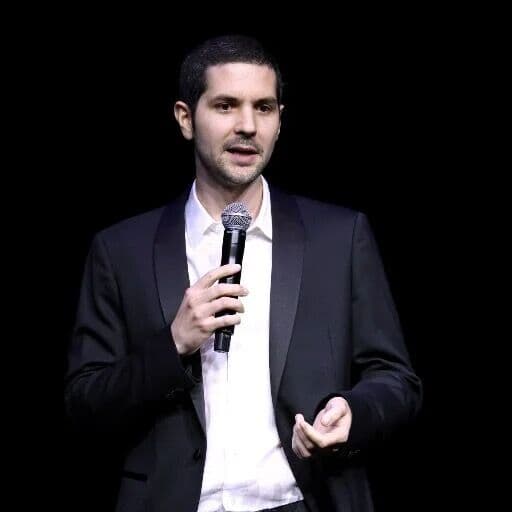
Jean Pierre Magro
Producer, Screenwriter
Jean Pierre Magro represents the vibrant cultural fabric of Malta and the island's burgeoning film industry, constantly pushing the boundaries of what is possible in storytelling and production.
More in Featured
Browse all




More in Trending
Browse all